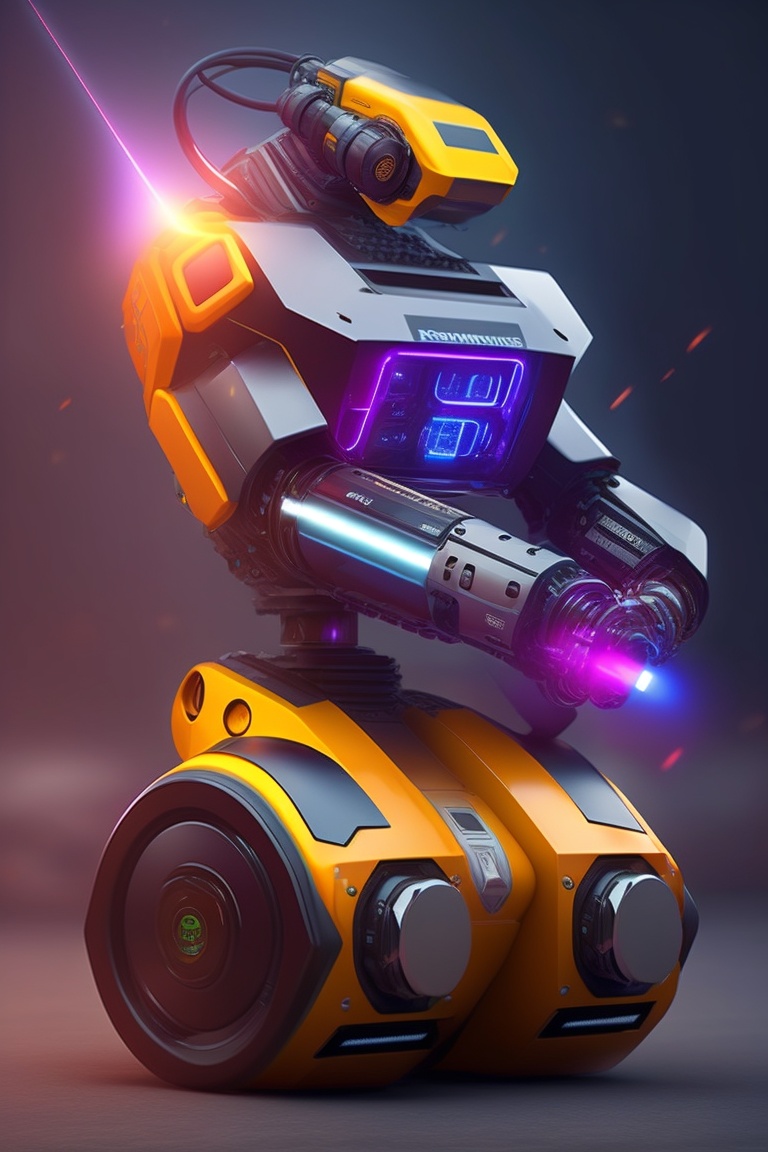
Robotics and Automation

Robotics and automation are rapidly evolving technologies that are revolutionizing various industries across the world. These technologies are primarily focused on the development of machines that can perform human-like tasks with high precision, accuracy, and speed. Robotics and automation have been instrumental in boosting productivity, reducing costs, improving safety, and enhancing the quality of products and services.
Robots and automated systems are designed to perform various tasks that require high precision and accuracy, such as assembling, painting, welding, packaging, and material handling. These machines are also equipped with sensors, cameras, and other advanced technologies that enable them to adapt to their environment, monitor their performance, and make autonomous decisions.
In conclusion, robotics and automation are transforming the way we live and work. These technologies have the potential to boost productivity, reduce costs, improve safety, and enhance the quality of products and services. While there are concerns about the impact of these technologies on employment, the benefits outweigh the risks.
Is Robotics and Automation a good field?
Yes both Robotics and Automation are very good field but you have to be adaptive and headstrong at the same time for the desired results. Here are some basic difference between Robotics and Automation:
Automation — Automation means using computer software, machines or other technology to carry out a task which would otherwise be done by a human worker. There are many types of automation, ranging from the fully mechanical to the fully virtual, and from the very simple to the complex.There are two basic types of automation:
-
- Software Automation
-
- Industrial Automation.
Software Automation:-Most of the information on automation that you can find online is about software automation. This involves using software to carry out tasks which humans usually do when they are using computer programs.
Other types of software automation include:
-
- Business Process Automation (BPA)
-
- Robotic Process Automation (RPA)
-
- Intelligent Process Automation (IPA)
Industrial Automation:-Industrial automation is all about controlling physical processes. It involves using physical machines and control systems to automate tasks within an industrial process. A fully autonomous factory is the extreme example.There are many types of machine within industrial automation. For example,CNC machines are common in manufacturing.
Robots are only one type of machine.
Robotics — Robotics is a branch of engineering which incorporates multiple disciplines to design, build, program and use robotic machines.
What Is Robotics?
Let’s start with the basics. Robots are programmable machines which are able to carry out a series of actions autonomously, or semi-autonomously. They interact with the physical world via sensors and actuators. Because they are re-programmable, they are more flexible than single-function machines.
Robotics, therefore, refers to anything involving Robots.Within industrial automation, robots are used as a flexible way to automate a physical task or process. Collaborative robots are designed to carry out the task in the same way a human would. More traditional industrial robots tend to carry out the task more efficiently than a human would.
Advantages of being a Robotics/Automation Engineer:
-
- A highly paid and respectable job
-
- Both the government and the private sector give a lot of benefits to retain their skilled workforce
-
- Most Robotics/Automation engineers are employed in laboratories, space exploration, manufacturing plants, mining and organizations.
Disadvantages of being a Robotics/Automation Engineer:
-
- Though highly paid, the work is very demanding
-
- Niche field, therefore limited opportunities
-
- The job requires long hours of work.
